


EquifHIT
EquifHIT
99 in stock
EquifHIT is an advanced, non-invasive vestibulo-ocular reflex (VOR) testing device, which stabilizes steady gaze during head movements. It assesses the function of the semicircular canals by analyzing eye movements during rapid head impulses, helping detect vestibular abnormalities. This provides valuable insights for patients experiencing dizziness, imbalance, and vertigo, enhancing clinical diagnosis and treatment planning.
What's Included?
- EquifHIT Headband Device (with high-precision angular velocity sensors)
- Air Mouse Remote
- User Manual




Product Features
How does EquifHIT work?
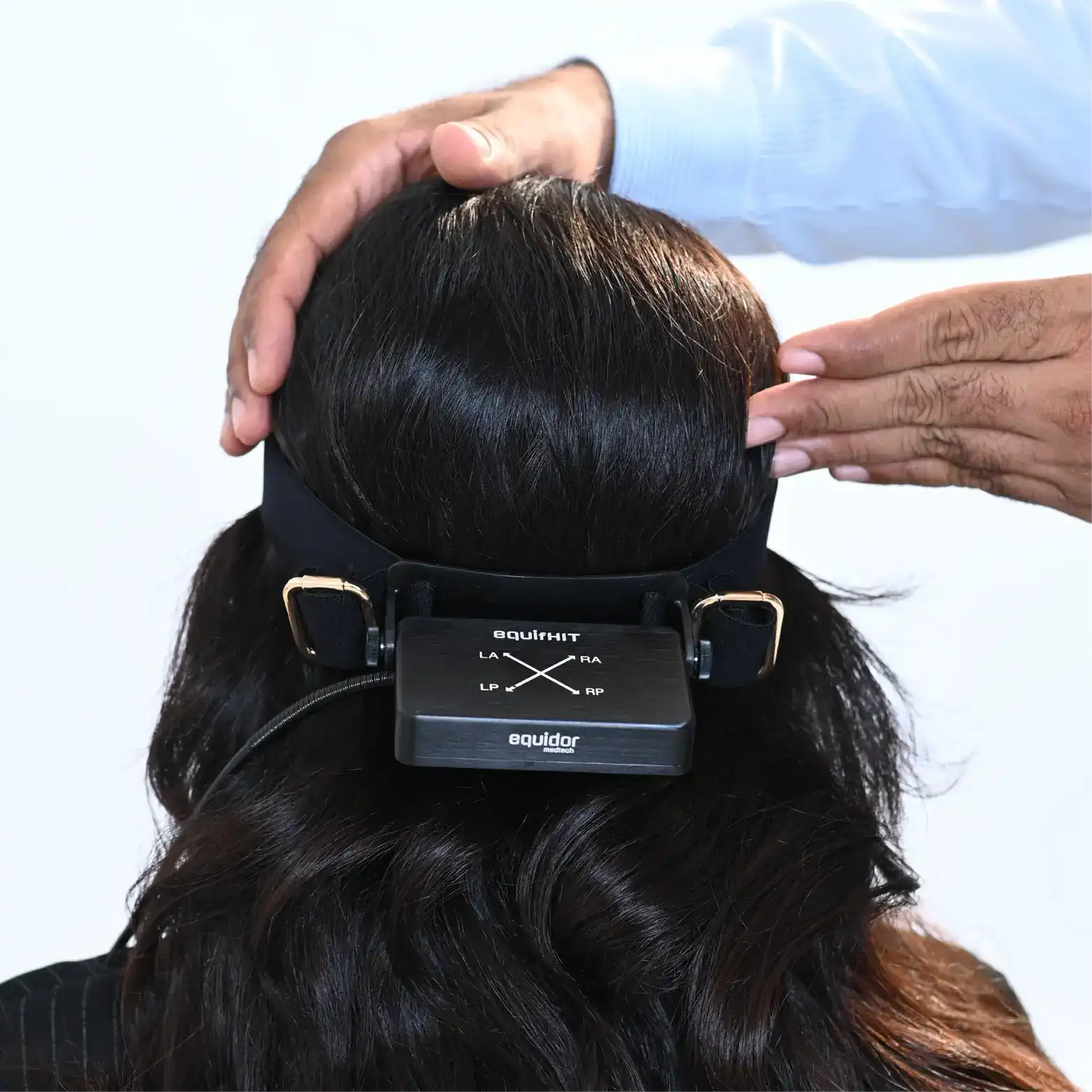
- Secure headband on forehead; sensor rests on back of scalp.
- Align sensor to horizontal, left anterior-right posterior (LARP), and right anterior-left posterior (RALP) axes.
- Connect the device and start the calibration wizard.
- Run a quick calibration to check sensor alignment.
- Choose a canal to test in the software.
- Deliver passive head impulses in the selected plane.
- Show optotypes at peak head velocity.
- System auto-rejects poor-quality trials.
- Record correct responses out of 10.
- View color-coded VOR results and a detailed report.
Key features of EquifHIT
- High-precision head-mounted sensors capture angular velocity in horizontal, LARP, and RALP planes.
- Automatic error rejection discards flawed trials for reliable VOR data.
- Inclusive optotypes (Snellen letters and Landolt C) accommodate all patients.
- Rapid testing presents optotypes at peak head velocities, with 10 trials per canal.
- Color-coded indicators (green/yellow/red) simplify result interpretation.
- Comprehensive, canal-specific reports show “correct out of 10” scores and visual summaries.
- Independent evaluation of all six semicircular canals.
- Initial visual acuity check with stable head positioning.
- Automatic calibration and instant normative feedback.
Clinical Uses of EquifHIT
- Diagnosis of Vestibular Neuritis & Labyrinthitis Detects unilateral vestibular hypofunction through corrective saccades during head impulse testing.
- Assessment of Ménière’s Disease Identifies transient vestibular deficits during acute episodes and evaluates inter-attack stability.
- Evaluation of BPPV (Benign Paroxysmal Positional Vertigo) Supports differential diagnosis by confirming canal-specific involvement, especially in chronic cases.
- Detection of Superior Canal Dehiscence (SCD) Assesses abnormal VOR responses linked to sound- or pressure-induced vertigo.
- Central Vestibular Disorder Differentiation Helps distinguish central causes like brainstem stroke (PICA/AICA), multiple sclerosis, and cerebellar ataxias from peripheral dysfunctions.
- Identification of Bilateral Vestibular Loss Quantifies VOR deficits in both directions, useful in cases of ototoxicity, CANVAS syndrome, or autoimmune inner ear disease.
- Evaluation of Oscillopsia and Dynamic Visual Acuity Loss Measures visual stability during head motion, crucial for patients with blurred vision or motion sensitivity.
- Support in Chronic Dizziness Workup Reveals subtle vestibular impairments missed by conventional bedside tests.
- Fall Risk Assessment in Elderly Provides objective data for balance evaluation and fall prevention strategies.
- Monitoring Vestibular Rehabilitation Progress Tracks improvement or deterioration over time, aiding in therapy adjustments.
Who's a candidate?
- Patients with Vertigo or Dizziness
Conditions: Benign Paroxysmal Positional Vertigo (BPPV), Ménière’s disease, vestibular neuritis, labyrinthitis.
- Individuals with Balance Disorders
Symptoms: Oscillopsia, postural instability, nystagmus.
- Neurological Patients
Conditions: Stroke (PICA/AICA), Multiple Sclerosis, Spinocerebellar Ataxia.
- Bilateral Vestibular Loss Cases
Causes: Ototoxicity (e.g., gentamicin), autoimmune inner ear disease, CANVAS syndrome.
- Geriatric Population
For fall risk screening and balance evaluation.
- Post-Rehab or Post-Surgical Patients
To monitor vestibular compensation and recovery.
- Healthcare Professionals
ENTs, neurologists, audiologists, physical therapists, and vestibular rehab specialists.
- Hospitals & Research Centers
Focused on vestibular diagnostics and balance disorder studies.
FAQs
What is EquifHIT?
EquifHIT is a non-invasive diagnostic device designed to evaluate the Vestibulo-Ocular Reflex (VOR), which stabilizes vision during head movements. It uses head-mounted sensors and optotype-based testing to assess the function of all six semicircular canals, helping clinicians detect vestibular dysfunctions that cause dizziness, imbalance, and vertigo.
How does EquifHIT work?
EquifHIT uses high-precision angular velocity sensors placed on the head to measure movement across three anatomical planes: horizontal, LARP (Left Anterior- Right Posterior), and RALP (Right Anterior- Left Posterior). During rapid head impulses, optotypes are presented at peak velocity, and the patient’s ability to identify them reflects the integrity of their VOR.
What conditions can EquifHIT help diagnose?
EquifHIT is useful in diagnosing a wide range of vestibular disorders, including Benign Paroxysmal Positional Vertigo (BPPV), Ménière’s disease, vestibular neuritis, labyrinthitis, bilateral vestibular loss, and central conditions like brainstem stroke, multiple sclerosis, and spinocerebellar ataxia.
Who can benefit from EquifHIT testing?
Patients experiencing dizziness, vertigo, imbalance, or motion sensitivity can benefit from EquifHIT. It’s especially valuable for elderly individuals at risk of falls, patients undergoing vestibular rehabilitation, and those with complex or chronic vestibular symptoms.
How is EquifHIT different from traditional head impulse tests?
Unlike manual head impulse tests, EquifHIT provides objective, quantifiable data using timed optotype presentation and automated error rejection. It eliminates subjectivity and improves diagnostic accuracy, especially in subtle or bilateral vestibular deficits.
Is EquifHIT suitable for use in regular clinics?
Yes. EquifHIT is designed to be clinic-friendly, requiring only a standard i5+ laptop and a 1080p+ monitor. It works in well-lit environments and does not require specialized rooms or equipment, making it ideal for ENT, neurology, audiology, and rehabilitation settings.
What does a typical EquifHIT test involve?
The patient wears a headband with sensors, and the clinician delivers passive head impulses in specific planes. Optotypes appear briefly at peak head velocity, and the patient identifies them. The system records correct responses and generates a canal-specific report.
How long does an EquifHIT test take?
Each canal test takes just a few minutes. A full assessment of all six semicircular canals can be completed in under 15 minutes, including setup and calibration.
What kind of results does EquifHIT provide?
EquifHIT presents results as the number of correct responses out of 10 for each canal. These are color-coded- green (normal), yellow (borderline), and red (abnormal)- and compiled into a detailed report for clinical interpretation.
Can EquifHIT track progress over time?
Yes. EquifHIT stores session data, allowing clinicians to compare results over time. This is especially useful for monitoring rehabilitation progress or evaluating treatment outcomes.
Is EquifHIT safe and comfortable for patients?
Absolutely. EquifHIT is non-invasive, lightweight, and does not require electrodes or visual fixation. Patients simply follow head movement instructions and identify optotypes, making it suitable for all age groups.
Does EquifHIT require special training to operate?
Basic training is recommended to ensure proper sensor placement and test execution. Equidor Medtech provides training sessions, video tutorials, and ongoing technical support to help clinicians use the system effectively.
Can EquifHIT be used alongside other vestibular tests?
Yes. EquifHIT complements other vestibular assessments like videonystagmography (VNG), video Head Impulse Test (vHIT), vestibular evoked myogenic potentials (VEMP), and caloric testing, offering a more complete diagnostic picture.
What hardware comes with EquifHIT?
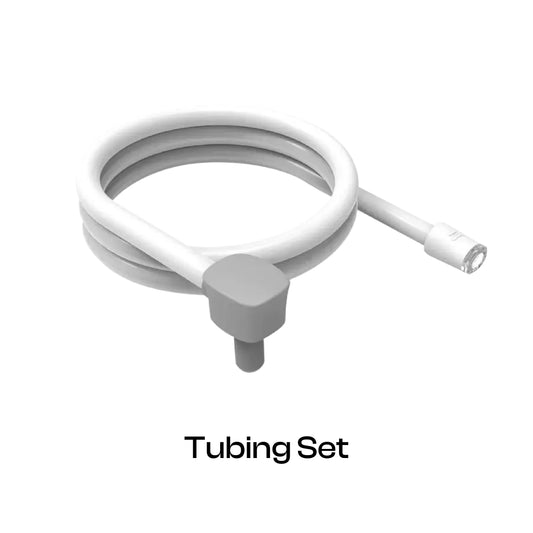
The EquifHIT kit includes a headband with integrated sensors, calibration tools, connection cables, and access to the software platform. It’s compatible with standard clinic computers and monitors.
How can I purchase EquifHIT and get support?
EquifHIT is available through Equidor Medtech LLP’s online store or authorized distributors. You can request a demo, get a customized quote, and access training and support by contacting their team via the Shopify contact form or official website.

EquifHIT

EquifHIT
EquifHIT